Gist: Private wharf owners who need to rebuild after this year’s destructive January storms can now apply for up to $2 million in state grants.
Web Site
Source: Penobscot Bay Press URL: https://penobscotbaypress.com/articles/latestnews-islandadvantages/25-million-for-working-waterfronts-ready-for-applicants/?pubid=islandadvantages Author: BY JACK BEAUDOIN Publication Date: 2024-05-16 Acquisition Date: 2024-05-22
$25 million for working waterfronts ready for applicants
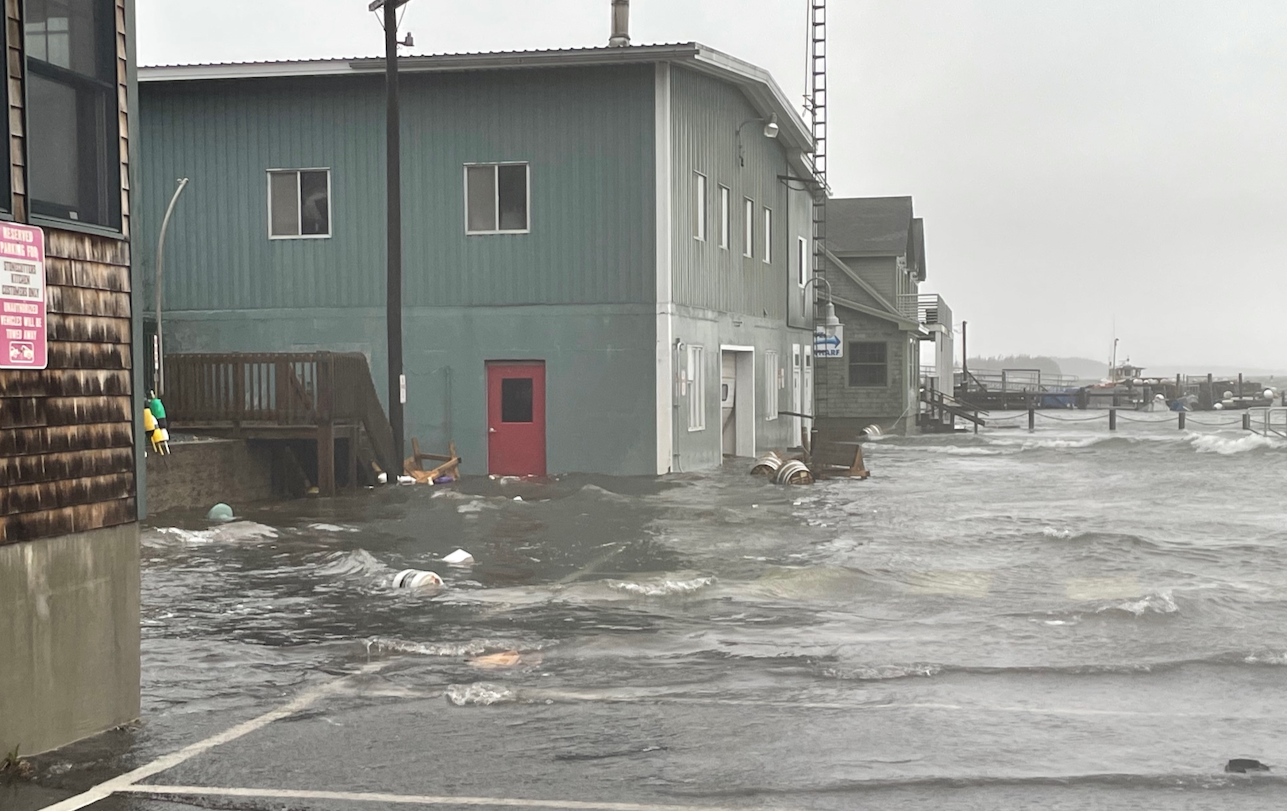
STONINGTON—Private wharf owners who need to rebuild after this year’s destructive January storms can now apply for up to $2 million in state grants.
Gov. Janet Mills said applications for the $25 million Working Waterfront Resiliency Fund opened on May 9. According to documents posted to the Department of Marine Resources website, the program aims to rebuild wharves and piers “with community benefit” that were damaged in the coastal storms and improve their resiliency to future storm events. In addition to wharves and piers, funds can also go towards associated structures and systems like bait sheds and fuel depots. Equipment such as forklifts or traps are ineligible for funding.
The state money is available to successful applicants as a 1:1 match.
“Maine’s working waterfronts are the lifeblood of our coastal communities, and they were hit incredibly hard by last winter’s devastating storms,” said Mills, who requested emergency funding outside the regular state budget soon after the storms struck. “This important funding will help rebuild damaged wharves and piers that commercial fishermen, and, by extension, our coastal communities and our entire state, depend on for our livelihoods and our economy. I hope this step forward, with more to come, can provide at least some sense of certainty as we look to rebuild stronger and better to preserve our working waterfronts for years to come in the face of worsening weather.”
Applicants may request funds for design, permitting and construction costs for their project. DMR will host a virtual workshop on Tuesday, May 28, at 4 p.m. to field questions about the process. The meeting link is available at maine.gov/dmr/meetings. Applications must be submitted and received by Monday, June 10, at 4 p.m. Funds could begin to flow by August, according to DMR Commissioner Patrick Keliher.
Tough timing
In order to get the greatest bang for the buck, the DMR said that wharves and piers serving 20 or more fishermen and aquaculturists would be prioritized. Stonington Town Manager Kathleen Billings said that was good news for her town, where some of the worst damage occurred at lobster co-ops and dealers who serve an estimated 350 lobster boats.
“The town has to act as a pass-through entity,” Billings said, noting that the program requires municipalities to sponsor pier and wharf owners who apply to confirm town support and commit to administering the financial transactions.
But she also said the program’s timing was problematic for organizations like the town’s co-ops which have already completed repairs in order to open for the season. Other facilities can’t wait until August and will have to seek reimbursement from the fund.
While the program rules do permit reimbursement for completed work, such work has to meet new rules for resiliency. The rules are intended to “mitigate the effects of sea level rise, increased storm frequency and intensity from the southeasterly direction, and general fortifying of structures to resist or mitigate overtopping and uplift,” according to guidelines published on the DMR website.
Examples include raising structures by an unspecified amount to mitigate overtopping, installing blow-out panels on buildings to reduce the impact of lateral forces on piers, and installing drainage systems, scuppering and wave breaks to “allow water to flow through the structure or be diverted around” it during inundating tides.
The rules also require that electrical and fuel systems are protected from flooding via cofferdams—essentially an area protected by a dike—or elevated placement.
While the first tranche of funding will be directed to the largest wharves and piers, any remaining funds will become available to projects that support a minimum of 10 but fewer than 20 licensed commercial fishermen or aquaculturists.
“This past winter’s storms are the new norm,” Keliher said. “This is the first step in investing in this critical infrastructure. Our working waterfront must be preserved for future generations by ensuring it is resilient to a changing climate.”
At the same time, he urged applicants to act quickly for this particular pot of money.
“The State will not be able to contribute additional funds if project costs increase,” the DMR’s “Frequently Asked Questions” document warns. “The goal of the Program is to allocate all available funds—therefore, once allocated, we do not anticipate a source of additional funding.”
Keywords
Published in $25 million for working waterfronts ready for applicants - Penobscot Bay Press